


Still No Room at the Inn for Many Children around the Globe
- Jan 8, 2016
- 3 min read
As Christians worldwide conclude their annual adoration of a baby born in a Bethlehem manger, millions of children around the globe continue to lack a safe place to sleep.
Addressing homelessness in a global context is challenging enough, says Stephen Gaetz, director of the Canadian Observatory on Homelessness, but understanding the status of children who lack any accommodations or are living in temporary spaces is even more complicated. In Canada alone, he says, “there is different legislation that indicates when you become an adult, whether it’s your driver’s license, when you can see a doctor on your own, when you can vote, when you can join the army, when you can get married; it’s all over the place.”
Estimating the number of children on the streets is an equation that takes government guesstimates combined with single-day street counts and other research to develop the most realistic answer when precise measurement is not possible.

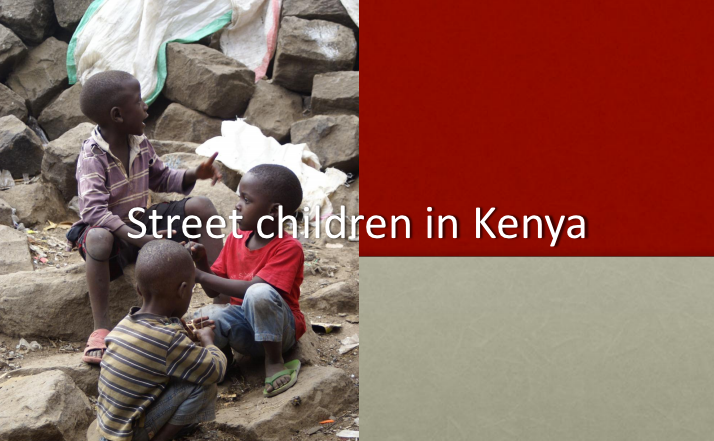
Gideon Ochieng, director of Kenya’s Center for Transforming Mission (CTM), an organization that trains local leaders in Nairobi, Mathare, Kibera and Kawangware, says the number of children projected to be living and working on the streets of his country varies—often significantly—in each study. The 2014-15 official government reports estimate 250,000 to 300,000 homeless children across the country. But this number is nearly the same as in 2007, yet the government previously estimated that the number of homeless children was growing at a rate of 10 percent a year.
A study by the Nairobi Central Business District Association in 2001 found boys outnumbered girls 9-1, while a report by the Women Educational Researchers of Kenya found girls constituted about a quarter of the children on the capital’s streets. The estimated presence of girls in areas outside Nairobi is even higher: 40 percent in Mathare, 31 percent in Eastleigh and 28 percent in Pangani.
Ochieng says, “The girls tend to want their privacy.” Because they are vulnerable to sexual exploitation, they try to keep themselves hidden. That may account for some of the varying statistics. Research reveals that girls living on the street also tend to have better hygiene than boys, but make half or less than half of the roughly $1 per day that boys make for the menial work they can find. Most kids experiencing “streetism,” says Ochieng, are between 11 and 15 years old. Boys collect garbage and load or unload market goods to earn money, while girls may enter prostitution to cover their expenses.
About 40 percent of children interviewed on the streets of Nairobi report attending school. But Ochieng says even those who attend school simply get fed and learn their letters, but cannot read or write their names. After eight years of the poor quality schooling that is available to homeless students, they cannot pass national exams. “These kids will end up going back to the streets,” he says.

Ochieng reports that many Kenyan children surviving on the streets were orphaned or abandoned. Others are pulled there to earn money, seek food, find recreation or are pushed there to escape conflict or violence in their homes. Once they land on the street, they are hungry and become lonely and scared because they suffer harassment and violence—often at the hands of police who blame them for crimes. Some may begin taking or selling drugs and may contract HIV/AIDS or become pregnant because they are sexually abused by adults or street gangs. A large percentage of young boys make their living in the Mukuru slums on the east side of Nairobi, where a large garbage dump is located.
Kenya has no policy on the rights of homeless and street children, causing difficulty for them when they enter the legal system, Ochieng reports. About 250 organizations work to fill the void created by Kenya’s lack of a clear strategy to address street children. The groups offer a variety of services and opportunities, such as daytime drop-in centers, scholarships, vocational training, housing, feeding programs and social services. Some programs target the children’s mothers for jobs that have helped them achieve financial stability, their own homes and the ability to send their kids to school.
For more information, contact at Ochieng at http://bit.ly/1MPwQIw.
Disclaimer: The opinions, representations and statements made within this guest article are those of the author and not of the Institute of Global Homelessness as a whole.


Comments